

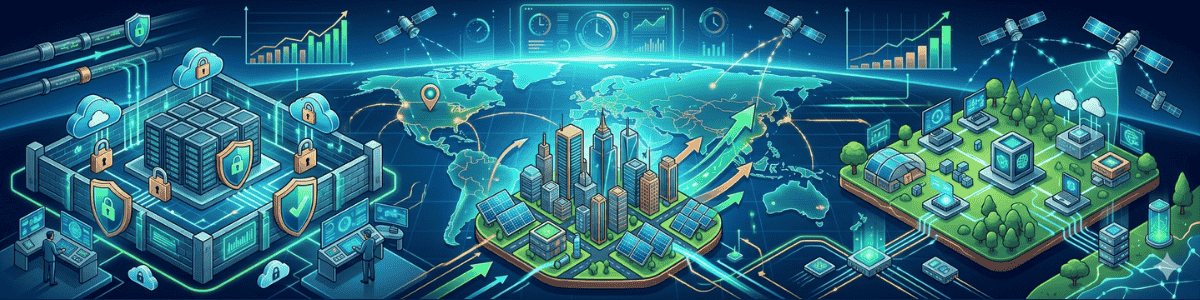
Why Tech Sovereignty Matters More Than Ever
In 2026, technology is no longer just an economic advantage—it is national infrastructure.
From semiconductors and cloud systems to AI models and cybersecurity frameworks, countries are realizing that digital dependence creates strategic vulnerability. The result is a global push toward tech sovereignty: the ability to control critical technology systems without dangerous external reliance.
This shift is not about isolation.
It is about resilience.
Governments and enterprises alike are asking the same question: What happens if our most important digital systems depend on someone else’s political decisions?
That question is shaping global strategy.
What Is Tech Sovereignty?
Tech sovereignty means having trusted control over critical digital capabilities.
This includes:
- Semiconductor manufacturing
- Cloud and data infrastructure
- AI development and deployment
- Cybersecurity systems
- Telecom and network resilience
- Energy-tech integration
- Strategic software supply chains
The goal is not to build everything alone.
It is to reduce dependency on fragile or politically risky external systems.
Countries want flexibility, continuity, and operational control during crisis.
In a volatile world, dependence becomes risk.
Semiconductors Are the New Strategic Oil
No area defines tech sovereignty more clearly than semiconductors.
Modern economies depend on chips for everything—AI infrastructure, defense systems, electric vehicles, telecom, healthcare devices, and industrial automation.
Supply disruptions over the past few years exposed how fragile global chip production really is.
This is why nations including the United States, India, Japan, and members of the European Union are investing heavily in domestic manufacturing and strategic partnerships.
Chip security is now economic security.
Sovereign Cloud and AI Infrastructure Are Rising Fast
Cloud dependency is another major concern.
Enterprises once prioritized speed and scale through global cloud platforms. Now they are asking where data lives, who controls it, and what legal systems govern access.
This is accelerating demand for sovereign cloud infrastructure and hybrid networks.
Providers like Microsoft, Amazon Web Services, and Google Cloud are expanding regional sovereign cloud solutions because governments and regulated industries need stronger compliance and control.
AI sovereignty follows the same logic.
Who owns the model matters as much as who uses it.
Cybersecurity Is Now a Sovereignty Issue
Cyberattacks are no longer treated as isolated IT incidents.
They are strategic threats.
Critical infrastructure, financial systems, energy networks, and government platforms are increasingly targeted through cyber warfare and state-linked attacks.
This makes cybersecurity part of national resilience planning.
Digital sovereignty requires:
- Secure infrastructure
- Identity governance
- Local incident response capability
- Trusted vendor ecosystems
- Regulatory alignment across sectors
Without security, sovereignty is only theoretical.
Supply Chains Are Being Rebuilt for Trust
Global efficiency once rewarded concentration.
Now resilience rewards diversification.
Businesses are redesigning supply chains around trusted partnerships, regional manufacturing, and geopolitical risk management. This includes software vendors, infrastructure providers, and industrial hardware—not just physical goods.
The idea of “friendshoring” is becoming a long-term operating model.
Companies want fewer single points of failure.
Trust is becoming part of procurement strategy.
Final Thoughts
Tech sovereignty in 2026 is not a political slogan.
It is a business survival strategy.
The future belongs to countries and enterprises that can protect critical systems while staying globally competitive. That means stronger chip ecosystems, sovereign cloud architecture, AI governance, and resilient digital supply chains.
The goal is not technological independence at all costs.
It is strategic independence where it matters most.
Because in the next decade, resilience will outperform convenience.
And the strongest economies will not be the fastest adopters of technology.
They will be the smartest owners of it.
