

Wearables Are No Longer Just Fitness Trackers
There was a time when wearable technology meant one thing: counting steps.
A smartwatch tracked movement, reminded you to stand up, and maybe measured your heart rate during a workout. In 2026, that definition feels outdated.
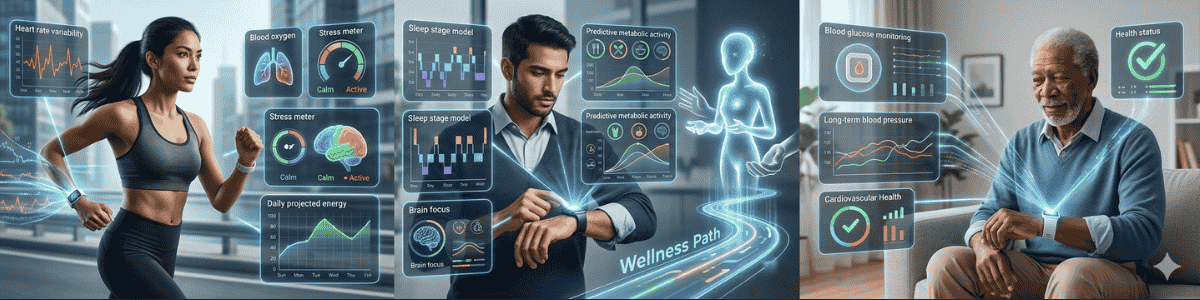
Today’s wearables are becoming full-scale AI health companions—devices that monitor, predict, and guide personal wellness in real time.
From smart rings and advanced watches to biosensor patches and AI-powered earbuds, wearable tech is shifting from passive tracking to active health intelligence.
The goal is no longer data collection.
It is better decision-making.
What Modern Wearables Can Do
The new generation of wearables focuses on continuous insight rather than occasional fitness reporting.
They can now track:
- Sleep quality and recovery readiness
- Stress levels and nervous system patterns
- Heart rate variability (HRV)
- Blood oxygen and respiratory signals
- Metabolic health and glucose trends
- Hydration and body temperature
- Mental focus and fatigue patterns
Instead of showing isolated numbers, AI helps interpret what those signals actually mean for daily life.
This makes wearables feel less like gadgets and more like personal advisors.
Smart Rings Are Leading the Shift
One of the strongest trends in 2026 is the rise of smart rings.
Unlike bulky smartwatches, rings are comfortable, discreet, and easier to wear continuously. This makes them ideal for high-quality biometric monitoring.
Products like the Oura Ring and innovations from Samsung and Ultrahuman are turning rings into powerful health platforms.
Users can receive recovery insights, sleep recommendations, and stress warnings without checking a screen every few minutes.
The best wearable is often the least visible one.
AI Makes Health Data Actually Useful
Raw data alone does not improve health.
Most users do not need more numbers—they need clarity.
This is where AI changes everything.
Instead of saying “you slept 6.2 hours,” an AI system might recommend avoiding intense training today or adjusting your schedule based on recovery signals.
Instead of showing elevated stress, it may detect patterns linked to burnout risk.
This turns wearable technology into predictive support.
Health becomes proactive rather than reactive.
That is the real breakthrough.
Preventive Care Is Becoming Personal Infrastructure
Healthcare is also shifting from treatment to prevention.
Wearables support this by helping users detect changes before they become serious problems. Early signals around sleep decline, abnormal recovery, cardiovascular stress, or metabolic imbalance can guide faster decisions.
This is especially valuable for professionals managing burnout, athletes optimizing performance, and aging populations focused on long-term wellness.
The wearable becomes part of daily infrastructure—like checking the weather before leaving home.
Small signals prevent bigger problems.
Privacy and Trust Will Shape the Market
As wearables collect more personal data, privacy becomes critical.
Users want to know:
Who owns this health information?
Where is it stored?
How is it shared?
Trust will decide which brands win.
Companies that prioritize transparency, local processing, and ethical AI design will lead the next phase of wearable adoption.
Health data is deeply personal.
Technology must respect that.
Final Thoughts
Wearables in 2026 are no longer about fitness trends.
They are becoming intelligent health companions that support better decisions every day.
From smart rings to advanced biosensors, these devices help people understand energy, recovery, stress, and long-term wellness with far greater precision.
The future of healthcare is not only in hospitals.
It is on your hand, your finger, and your skin.
Because the most valuable technology is not the one that gives more information.
It is the one that helps you live better because of it.
That is where wearable tech is heading next.
