

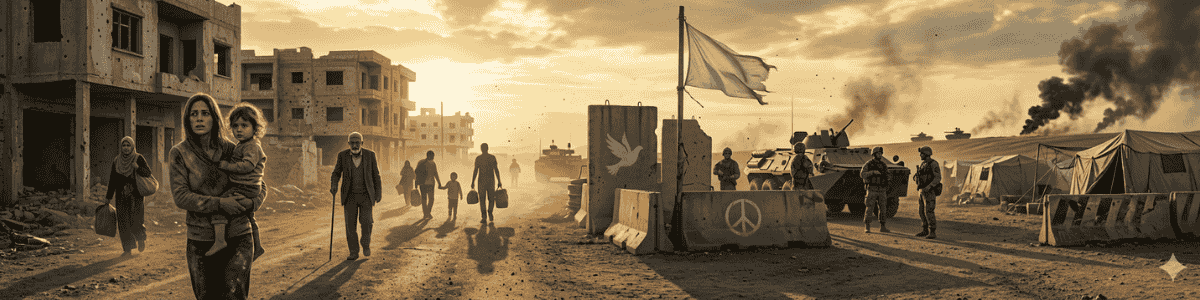
Why Temporary Peace Is No Longer Enough
In 2026, ceasefires are happening more often—but lasting peace is becoming harder to achieve.
From Gaza to Sudan, from Ukraine to parts of the Sahel, short-term ceasefires are repeatedly announced, briefly celebrated, and then broken. These fragile pauses reduce immediate violence, but they rarely solve the deeper political, humanitarian, and structural causes of conflict.
The result is a dangerous cycle: pause, collapse, escalation, repeat.
For civilians trapped inside war zones, this is not diplomacy.
It is survival under uncertainty.
According to United Nations conflict monitoring reports, repeated ceasefire failures are worsening displacement, aid disruption, and civilian trust in peace processes worldwide.
Ceasefires Without Trust Cannot Last
Most modern ceasefires fail because they are built around urgency, not resolution.
Governments and armed groups often agree to temporary pauses under international pressure, humanitarian emergencies, or military exhaustion. However, they rarely resolve the core issues—territory, governance, power-sharing, economic access, or political legitimacy.
Without trust, ceasefires become tactical tools rather than real peace agreements.
Each violation creates deeper suspicion.
Each broken promise makes the next negotiation harder.
Peace requires institutions, not just announcements.
Civilians Pay the Highest Price
The human cost of failed ceasefires is enormous.
Families return home only to flee again. Hospitals reopen and then lose access to medicine. Aid corridors briefly function before collapsing. Schools restart and then shut down.
This repeated instability creates psychological trauma alongside physical destruction.
In places like Sudan and Gaza, humanitarian organizations report that communities no longer trust ceasefire declarations because previous agreements lasted only days or weeks.
For civilians, hope itself becomes risky.
Fragile peace often creates a second layer of suffering: the emotional collapse of expectation.
Humanitarian Access Depends on Stability
Aid organizations need predictability to operate.
Food distribution, medical supply chains, refugee protection, and water access all depend on stable access routes. When ceasefires fail suddenly, humanitarian systems collapse with them.
This is especially dangerous in famine-prone regions such as Sudan, Yemen, and parts of the Sahel, where even a few days of interruption can create mass consequences.
According to World Food Programme, conflict-related access disruption remains one of the biggest drivers of food insecurity in fragile states.
Peace is not only political.
It is logistical.
External Powers Often Complicate Peace
Many conflicts today involve multiple international actors.
Regional powers, global alliances, proxy funding, and strategic military interests often make peace negotiations far more complex. A ceasefire between local actors may not hold if outside sponsors have different goals.
This is visible in conflicts across the Middle East, Eastern Europe, and Africa.
Short-term peace agreements often fail because the real negotiation is happening beyond national borders.
Diplomacy must address both local grievances and global power competition.
What Real Peace Requires
Sustainable peace needs more than silence between gunfire.
It requires:
- Political legitimacy
- Economic recovery
- Security guarantees
- Justice mechanisms
- Civilian protection systems
- Long-term international accountability
Without these foundations, ceasefires remain fragile pauses—not durable solutions.
The strongest peace agreements are not the fastest.
They are the deepest.
Final Thoughts
The human cost of fragile peace is often invisible to those outside conflict zones.
A broken ceasefire is not just a failed diplomatic event.
It is another child displaced, another hospital closed, another family forced to start over.
Short-term ceasefires matter because they save lives.
But when they fail repeatedly, they can also deepen despair.
2026 is proving a hard truth:
Peace cannot be managed like a press release.
It must be built like infrastructure—slowly, carefully, and with systems strong enough to survive pressure.
Because for people living inside war, temporary peace is not enough.
They need something that holds.
