

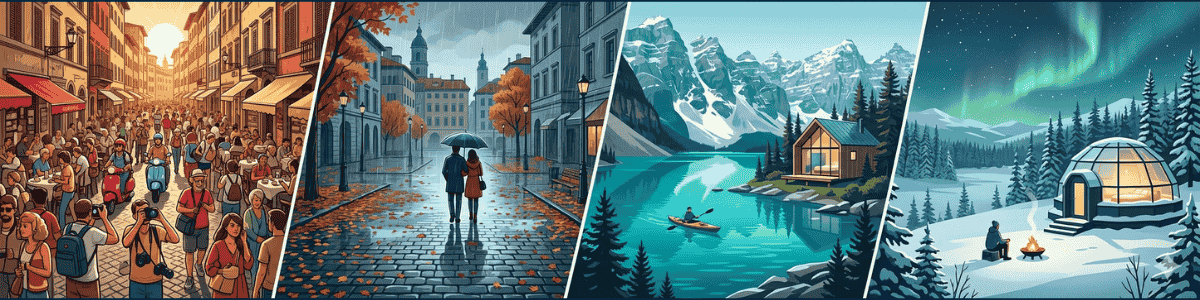
Why Travelers Are Choosing Coolcations in 2026
Travel in 2026 is no longer just about sunshine and crowded beach destinations.
A new trend is rising fast—coolcations.
Instead of chasing extreme summer heat in traditional hotspots, travelers are choosing cooler destinations, off-season escapes, and peaceful environments that offer calm over chaos.
From Nordic landscapes to mountain towns and coastal retreats during quieter months, people are redefining what a dream vacation looks like.
This shift is not only about weather.
It is about wellness, sustainability, and the growing desire to escape overstimulation.
In a world that feels louder than ever, travelers are searching for quiet.
What Is a Coolcation?
A coolcation is a vacation planned around cooler climates rather than warm-weather tourism.
Popular coolcation choices include:
- Scandinavia and Northern Europe
- Scottish Highlands
- Alpine villages
- Canadian mountain towns
- Japanese countryside escapes
- New Zealand’s quieter regions
- Northern coastal retreats
These destinations offer fresh air, slower rhythms, and less crowded experiences.
Instead of poolside luxury, travelers want forest walks, peaceful lakes, local culture, and restorative space.
The goal is not excitement.
It is emotional reset.
Heatwaves Are Changing Travel Decisions
Climate change is playing a major role in this trend.
Extreme summer temperatures across Southern Europe, the Middle East, and parts of Asia have made traditional peak-season travel less attractive.
Destinations like Athens, Rome, and Dubai often face heat alerts, overcrowding, and infrastructure stress during peak tourist months.
Travelers are responding by moving north, shifting dates, or avoiding peak summer altogether.
Comfort is becoming more valuable than convention.
Quiet Seasons Are Replacing Peak Seasons
Another major shift is the rise of quiet-season travel.
Instead of visiting famous places during peak demand, travelers are booking during shoulder seasons—spring, early autumn, and even winter.
This offers:
- Lower prices
- Better accommodation options
- Less crowded attractions
- More authentic local interaction
- Reduced environmental pressure
Destinations feel more livable and less performative.
Quiet-season travel supports both travelers and local communities by spreading tourism more sustainably throughout the year.
Wellness Travel Is Driving the Calm Economy
People are no longer traveling only for sightseeing.
They are traveling for recovery.
Burnout, digital fatigue, and constant connectivity have made wellness one of the strongest travel motivations in 2026. Coolcations align perfectly with this need.
Nature, silence, sleep quality, and slower movement are becoming premium experiences.
Luxury is being redefined.
For many travelers, the best vacation is not the busiest one—it is the one that allows them to feel mentally present again.
Social Media Is Making Quiet Luxury More Desirable
Social media once pushed fast, visible, high-energy travel.
Now it is helping promote the opposite.
Minimalist cabins, foggy forests, train journeys, hidden coastal towns, and peaceful cafés are becoming aspirational symbols of quiet luxury.
Travelers are seeking emotional exclusivity rather than visual status.
The best destination is often the one that offers stillness, not spectacle.
In 2026, calm itself is becoming a form of luxury.
Final Thoughts
Coolcations and quiet seasons reflect something bigger than a travel trend.
They reveal how people are changing their relationship with time, space, and rest.
Travel is becoming less about escape and more about restoration.
People want cooler places, slower schedules, and experiences that feel human rather than performative.
This shift is reshaping the global tourism industry.
Destinations that offer peace, sustainability, and authenticity will lead the next era of travel.
Because in a crowded world, calm is no longer a bonus.
It is the destination.
