

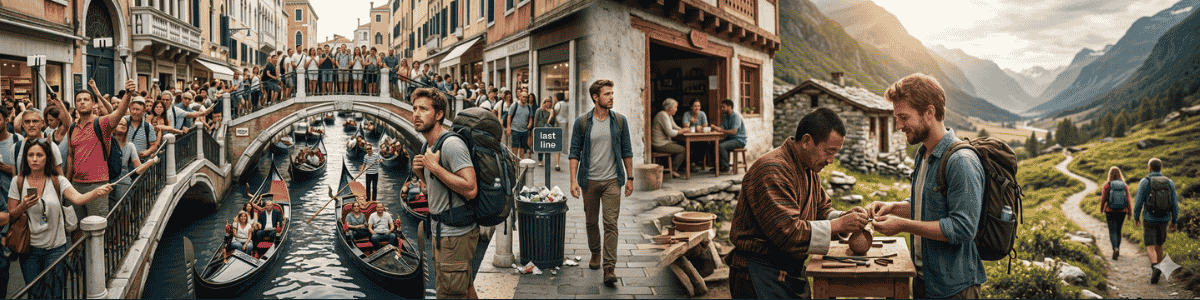
Why Travelers Are Saying No to Tourist Hotspots
For years, global travel followed a predictable pattern—Paris in summer, Bali for remote work, Dubai for luxury, and Santorini for Instagram-perfect sunsets.
But in 2026, that pattern is changing fast.
Travelers are increasingly rejecting overcrowded destinations and choosing something very different: quieter places, slower experiences, and meaningful local connections.
This growing movement is often called anti-tourism—not a rejection of travel itself, but a rejection of tourism that feels artificial, rushed, and over-commercialized.
People are no longer asking, “Where is everyone going?”
They are asking, “Where can I go that still feels real?”
What Is Anti-Tourism?
Anti-tourism is a travel mindset focused on authenticity over popularity.
It prioritizes:
- Less crowded destinations
- Local cultural experiences
- Slow travel and longer stays
- Sustainable tourism choices
- Community-based hospitality
- Nature, wellness, and reflection
Instead of collecting landmarks, travelers want deeper experiences.
They prefer small towns over major capitals, local guesthouses over luxury chains, and personal connection over checklist tourism.
This trend is especially strong among Gen Z and remote professionals who value flexibility and experience more than status.
Overtourism Has Created Travel Fatigue
Many famous destinations are becoming victims of their own popularity.
Cities like Venice, Barcelona, and Amsterdam continue to struggle with overtourism, rising local backlash, and infrastructure pressure.
Residents face higher housing costs, environmental stress, and the loss of local identity. Travelers feel the impact too—long lines, crowded streets, inflated prices, and experiences designed more for content than connection.
In response, many travelers are actively avoiding these destinations.
The goal is no longer to visit the most famous place.
It is to find the most meaningful one.
Slow Travel Is Replacing Fast Itineraries
Another major driver of anti-tourism is slow travel.
Instead of visiting five cities in seven days, travelers are staying longer in one place. They are renting apartments, working remotely, learning local routines, and spending money within communities rather than tourist zones.
This creates better cultural understanding and less environmental pressure.
It also supports mental well-being.
Travel is becoming less about escape and more about intentional living.
The journey matters more than the checklist.
Sustainability Is Now a Travel Decision
Climate awareness is also reshaping tourism choices.
Travelers are paying more attention to carbon impact, local sustainability, and ethical hospitality. Train travel, eco-lodges, and regional tourism are becoming stronger alternatives to high-frequency flights and luxury excess.
Destinations promoting regenerative tourism are attracting more conscious visitors.
People want to know their presence helps, not harms.
Sustainability is no longer a niche preference.
It is becoming a booking factor.
Social Media Is Quietly Fueling the Shift
Ironically, social media helped create anti-tourism.
As every destination became overexposed, many travelers started craving privacy and originality. Viral travel trends created the same experience everywhere—same cafés, same viewpoints, same photos.
Now people want the opposite.
They want places that are not trending yet.
Hidden villages, nature retreats, cultural towns, and off-grid escapes are becoming more desirable than famous landmarks.
In 2026, exclusivity often means invisibility.
Final Thoughts
The rise of anti-tourism shows that travel is becoming more personal and more conscious.
People are not traveling less.
They are traveling differently.
They want presence over performance, connection over crowds, and memory over marketing.
This shift is changing how destinations compete.
The winners will not be the loudest cities or the biggest resorts.
They will be the places that protect authenticity and offer something real.
Because in 2026, the most valuable destination may be the one everyone else overlooked.
